Finding Stillness: Simple Home Yoga to Start Your Day
Unlock your inner calm with easy home yoga. Create morning stillness, boost focus, and embrace peace. Simple poses to start your day refreshed and centered.
Finding Stillness: Simple Home Yoga to Start Your Day
The alarm sounds, and almost instantly, a cascade of thoughts about the day’s tasks, responsibilities, and to-dos floods the mind. Before your feet even touch the floor, the nervous system can already be gearing up for a sprint. Imagine, instead, beginning with a quiet acknowledgment of your own presence, a gentle stretch that unravels the night’s stillness, and a few breaths that anchor you firmly in the present moment. This isn’t about adding another chore to your morning; it’s about reclaiming a few minutes to consciously inhabit your body and set an intentional tone for the hours ahead.
Creating Your Sanctuary: Setting the Stage
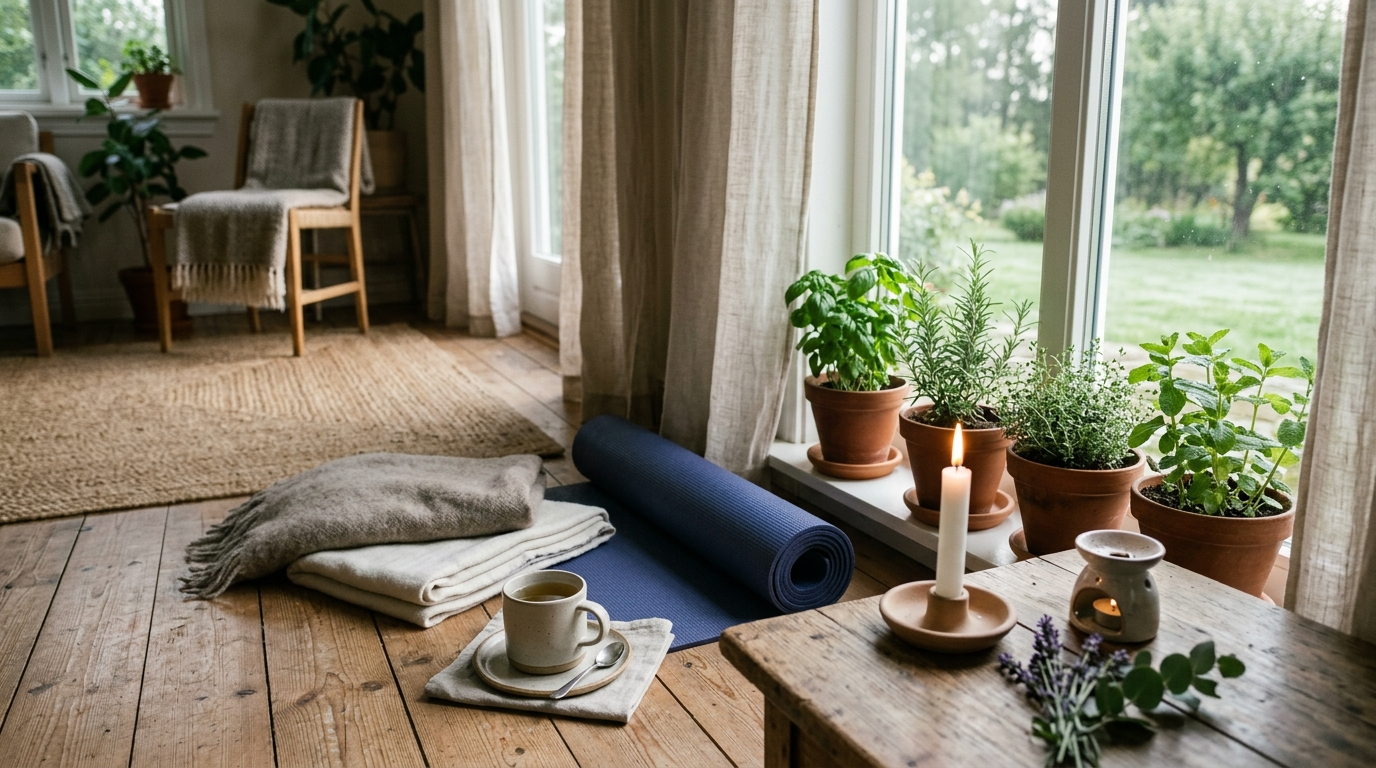
Committing to a home yoga practice doesn’t require a dedicated studio or an expensive array of props. What it truly needs is a small, consistent space—even a corner of your living room or bedroom—and a few moments of quiet intention. Lay out a yoga mat, or simply find a clear patch of carpet or floor. Ensure the space is free from clutter, symbolizing a clearing in your mind. If it helps create a sense of calm, dim the lights slightly or open a window to let in fresh air. You might light a candle or diffuse a gentle essential oil if those elements resonate with you. The goal is to cultivate an environment, however simple, that signals to your mind and body that this time is sacred and dedicated to self-care. Comfortable, non-restrictive clothing is key; choose fabrics that allow for full range of motion without distraction. Remember, the ‘sanctuary’ is less about external perfection and more about the internal quiet you cultivate.
Gentle Awakening: Breath and Movement
Begin your practice by simply arriving on your mat. Take a moment to sit comfortably, perhaps cross-legged or kneeling, and close your eyes softly. Place one hand on your belly and the other on your heart. Simply notice your breath without trying to change it. Feel the subtle rise and fall of your abdomen, the gentle expansion of your rib cage. This act of conscious breathing is not just a preparation for movement; it’s a profound practice in itself, inviting your awareness fully into the present moment.
Awaken the Spine: Cat-Cow Flow
From a tabletop position on all fours, with wrists under shoulders and knees under hips, begin a gentle Cat-Cow flow. Inhale as you drop your belly towards the floor, lift your gaze and tailbone, arching your spine gently (Cow Pose). Feel the expansion across your chest. Exhale as you round your spine towards the ceiling, drawing your navel towards your spine, and letting your head hang heavy (Cat Pose). Feel the stretch through your back and shoulders. Synchronize these movements with your breath, allowing them to be fluid and unhurried. Repeat for 5-8 rounds, gradually inviting more movement into your spine, noticing how each segment awakens. This movement gently lubricates the spinal discs and warms the core muscles supporting your back.
Open the Hips: Gentle Lunges
Transition from tabletop to a low lunge. Step your right foot forward between your hands, ensuring your right knee is stacked over your ankle. Keep your left knee on the mat, perhaps padding it with a folded blanket if needed. You can keep your hands on the mat for support, or if comfortable, bring them to your front thigh, gently pressing down to feel a deeper stretch in the front of your left hip. Breathe deeply into any sensations, allowing tension to soften with each exhale. Hold for 5-7 breaths, then gently release and switch sides. This pose helps to release tightness in the hip flexors, which can become stiff from prolonged sitting.
Reach and Release: Arm Raises and Side Bends
Return to a comfortable seated position. On an inhale, sweep your arms out to the sides and up towards the ceiling, stretching long through your fingertips. Feel the length created in your side body. As you exhale, gently lower your arms back down. Repeat this movement 3-4 times, coordinating with your breath. Then, with arms extended overhead, take a gentle side bend. Inhale to lengthen, and on an exhale, lean to your right, placing your right hand lightly on the floor beside you or grasping your left wrist with your right hand, feeling a stretch along your left side. Keep both sit bones grounded. Inhale back to center, and exhale to the left. These movements gently open the shoulders, chest, and sides of the torso, releasing common areas of tension.
Grounding Your Day: Standing Poses for Stability
Moving from the floor to standing offers an opportunity to connect with the earth beneath you, cultivating a sense of stability and centeredness that can carry through your day.
Mountain Pose (Tadasana): Finding Your Foundation
Stand at the front of your mat, feet hip-width apart or together, with your weight evenly distributed across both feet. Gently lift all ten toes, spread them wide, and then relax them back down. Feel the four corners of your feet pressing into the earth. Draw your kneecaps up slightly, engage your thigh muscles. Gently tuck your tailbone, drawing your navel slightly towards your spine to lengthen your lower back. Roll your shoulders up, back, and down, letting your arms hang naturally by your sides, palms facing forward. Your gaze can be soft, or you can gently close your eyes. Inhale deeply, imagining you’re drawing energy up from the earth through your feet and out through the crown of your head. Exhale, releasing any tension, feeling rooted and strong. Hold for 5-7 breaths, noticing the subtle swaying of your body and the effort your muscles make to keep you upright. This pose, while seemingly simple, is foundational to all standing postures and cultivates profound bodily awareness.
Gentle Tree Pose (Vrksasana variation): Cultivating Balance
From Mountain Pose, shift your weight onto your left foot. Gently bring the sole of your right foot to your inner left ankle, calf (avoiding the knee joint), or inner thigh. Bring your hands to your heart in Anjali Mudra (prayer position). Find a drishti, a soft gaze point on the floor or wall in front of you that is not moving, to help with balance. Breathe steadily, feeling your standing leg root down even as you find lightness and length through your spine. If you wobble, simply laugh, come out, and try again; balance is a practice, not a destination. Hold for 5-7 breaths, then gently release and repeat on the other side. Tree Pose encourages concentration and a sense of calm steadiness, qualities that are invaluable as you navigate your day.
Mindful Transition: Cooling Down and Centering
As your practice draws to a close, ease back down to the mat, allowing your body to integrate the movements and breathwork. This cooling phase is as important as the active part of your practice, offering a space for quiet reflection.
Gentle Twist (Supine): Releasing Tension
Lie on your back, knees bent, feet flat on the floor, arms extended out to the sides in a ‘T’ shape, palms facing up. Gently let both knees fall to the right, keeping your shoulders grounded. You can turn your head to the left if that feels comfortable for your neck. Breathe deeply, allowing your spine to gently twist and release tension. Feel the stretch across your chest and along your left side. Hold for 5-7 breaths, then slowly bring your knees back to center and repeat on the left side. Spinal twists are excellent for releasing compression and promoting flexibility in the back, often described as ‘wringing out’ the day’s stress.
Supported Relaxation: Constructive Rest or Savasana Variation
After your twist, extend your legs long or keep your knees bent with feet wide and knees leaning in towards each other for Constructive Rest. Allow your arms to rest comfortably by your sides, palms facing up. Close your eyes. This final resting pose, often called Savasana or Corpse Pose, isn’t just a nap; it’s a conscious practice of surrender and integration. Allow your body to feel heavy, releasing tension from your jaw, forehead, shoulders, and hips. Observe any lingering sensations without judgment. Simply be present with the quiet rhythm of your breath. Stay here for 5-10 minutes, allowing your mind to settle and your body to absorb the benefits of your practice. When you are ready to come out, gently wiggle your fingers and toes, roll to one side, and slowly press yourself back up to a comfortable seated position.
Integrating Practice: Listening to Your Body and Sustaining Your Journey
This home yoga practice is a flexible framework, not a rigid prescription. The true essence of holistic well-being lies in deeply listening to your body’s unique needs each day. Some mornings you might feel energized and capable of flowing through every movement, while others might call for just a few minutes of quiet breathwork and gentle stretches. There is no right or wrong; simply an invitation to connect.
Remember that yoga, while a powerful tool for enhancing physical and mental well-being, is a complementary practice. It offers support for your overall health but is not a substitute for professional medical advice or treatment for any health condition. Always consult with a healthcare professional regarding any concerns you may have.
The most profound aspect of a home practice is its accessibility and adaptability. Even five minutes of conscious breathing or a single gentle stretch can shift your perspective and subtly influence the trajectory of your day. Cultivate a practice of curiosity and compassion towards yourself. If a pose doesn’t feel right, modify it, skip it, or simply rest. Your body is your greatest teacher, and approaching your practice with kindness and awareness is the ultimate act of self-care. Consistency, even in small doses, is more impactful than sporadic, intense sessions. Allow your home yoga to become a gentle ritual, a consistent return to your center.
By embracing the quiet power of simple home yoga, you cultivate not just physical flexibility but also mental resilience, preparing you to meet your day with an open heart and a clear mind. This daily ritual fosters a deeper connection to your inner landscape, enriching your personal spectrum of well-being. Rainbow of Wellness celebrates these mindful choices that contribute to a vibrant, holistically healthy life.